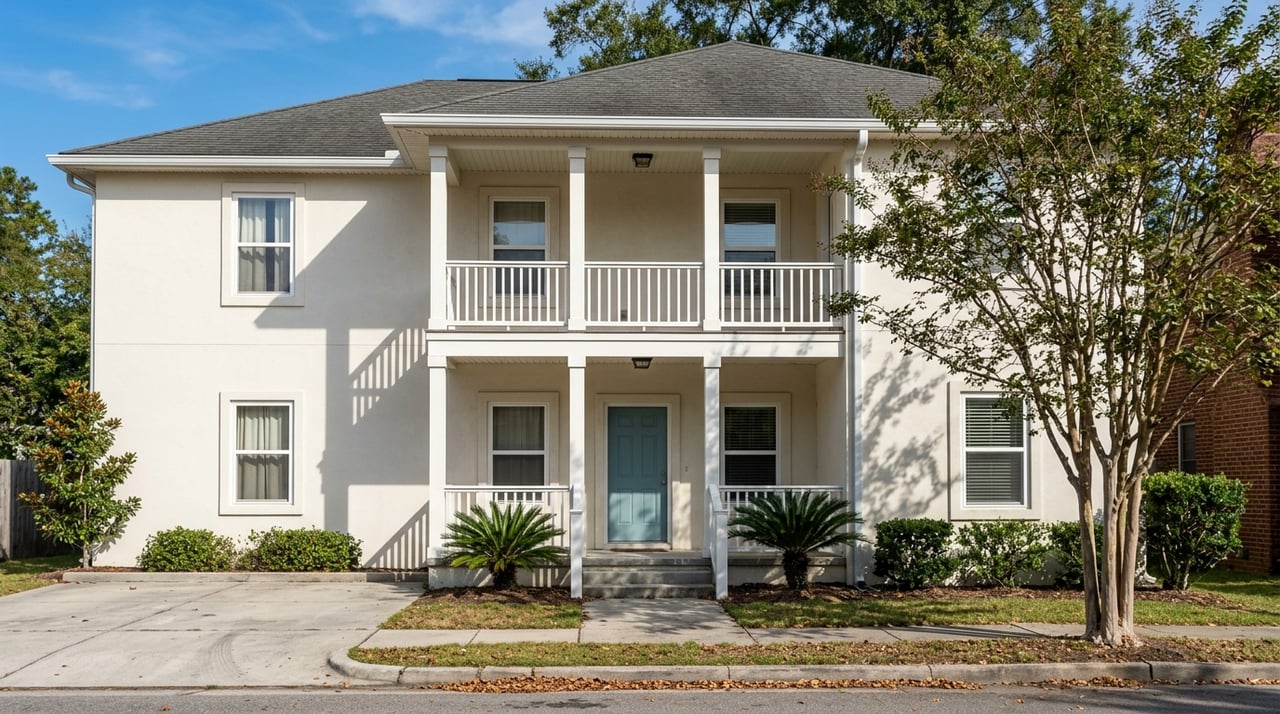
If you are thinking about investing in Panama City rentals, one question matters right away: which neighborhoods actually give you the best mix of demand, pricing, and long-term potential? In a market where public reinvestment is active and rental data can vary by source, it helps to look past the headlines and focus on what the numbers and city plans are really telling you. This guide breaks down the Panama City areas worth watching, what kind of rental strategy may fit each one, and where you should be careful before you buy. Let’s dive in.
Why Panama City Stands Out
Panama City is a smaller coastal market, but it has been growing. According to U.S. Census QuickFacts for Panama City, the city’s 2024 population estimate reached 37,024, which is up 12.0% from 2020.
That growth matters for investors, but so does the housing mix. The same Census data shows a 56.3% owner-occupied housing rate in the city, compared with 68.3% for Bay County overall. In plain terms, Panama City itself is more renter-heavy than the county, which can create more consistent demand for long-term rentals.
The city’s Planning and Zoning department also points to priorities like preserving neighborhood integrity, promoting walkability, and limiting strain on evacuation routes and infrastructure. On top of that, the city’s CRA activity and current projects show reinvestment in multiple areas, including Downtown, Downtown North, St. Andrews, and Millville, instead of one isolated hot spot.
Read Rent Data Carefully
Before you compare neighborhoods, it is important to understand that rent data does not always match from one source to another. Census QuickFacts reports a citywide median gross rent of $1,327, while listing-based sources like Realtor.com show city rental medians closer to $1,750 to $1,800.
That does not mean one source is wrong. It usually means the sources are measuring different things, such as occupied units versus active listings. For investors, the best way to use these numbers is as a screening tool, not as your final underwriting model.
Downtown North Looks Like a Workforce Play
If you are looking for a neighborhood with visible reinvestment and practical rental demand, Downtown North stands out. Realtor.com snapshots in the research place median listing prices around $249,900 to $259,500, with median rent around $1,600 to $1,700.
The city says the Downtown North CRA includes Greater Glenwood and Bay Medical Center, and a current CRA project is focused on creating a mixed-use commercial and residential area anchored by a grocery store and affordable multifamily housing. You can review those broader city priorities through Panama City’s current projects and Planning and Zoning resources.
For an investor, that points to a neighborhood that may fit:
- Small multifamily properties
- Workforce housing
- Mixed-use opportunities where allowed
- One- and two-bedroom rental formats
This area looks more compelling for long-term rental demand than for a vacation-rental-first strategy. Panama City’s average household size is 2.25, based on Census household data, which supports demand for smaller unit sizes in the urban core.
St. Andrews Offers an Established Rental Story
St. Andrews has a different appeal. It is one of Panama City’s long-standing CRA districts, and the city describes it as a historic coastal community focused on growth, sustainability, public access, and preserving character through the St. Andrews CRA.
In the research snapshot, Realtor.com places St. Andrews at about a $249,900 median listing price and a $1,600 median rent, while Apartments.com shows a lower average rent figure. Again, the main takeaway is not the exact number. It is that St. Andrews appears to have an active, established rental market with multiple demand drivers.
That can make it attractive for:
- Small long-term rental properties
- Duplexes or small multifamily, where available
- Potential short-term rental strategies, if zoning allows
- Investors who want a neighborhood with an existing identity and public waterfront draw
The city highlights public marina access, waterfront features, and an event-oriented district identity in St. Andrews. For landlords, that may support a mix of long-term local tenants and seasonal demand, depending on the property type and legal use.
The Cove and Bunkers Cove Favor Long Holds
If your investment approach leans more toward appreciation and longer tenant stays, The Cove and Bunkers Cove deserve a look. The city’s Adams Park page places the Cove area on Bunkers Cove Road overlooking St. Andrews Bay, reinforcing the bay-adjacent setting that often attracts buyer interest.
In the research snapshot, Realtor.com shows Bunkers Cove with a median listing price near $316,500 and a median rent of about $1,725, plus a relatively modest rental inventory compared with other areas. That mix suggests a neighborhood with stronger owner-occupant appeal and a thinner rental pipeline.
For investors, that usually means a different profile:
- More of a long-hold appreciation strategy
- Lower emphasis on maximizing initial yield
- Greater appeal for longer-term tenants seeking bay access
- Potentially less rental inventory competition, but also fewer opportunities to buy the right asset
In other words, Bunkers Cove may not be the first place you target if you want the strongest rent-to-price screen. It may be more interesting if you value location, scarcity, and long-term positioning.
Use Gross Yield as a Screen
One of the biggest mistakes rental investors make is confusing gross yield with cap rate. They are not the same thing.
A rough citywide screen using Panama City’s median gross rent and median owner-occupied value suggests about a 5.9% gross yield, based on the figures in the research. Neighborhood-level Realtor.com snapshots imply gross-yield proxies of roughly:
- Downtown North: about 7.4% to 8.2%
- St. Andrews: about 7.7%
- Bunkers Cove: about 6.5%
These numbers can help you compare neighborhoods quickly, but they are not true cap rates. Once you factor in taxes, insurance, vacancy, repairs, management, and turnover, your actual cap rate will usually come in lower.
Public multifamily marketing in Panama City supports that caution. The research cites a Crexi multifamily market overview showing a 7% median cap rate, while active marketed assets have ranged from the low 6% range to the high 8% range. That can give you a useful ballpark for stabilized multifamily, but property-level analysis still matters.
Short-Term Rentals Need Address-Level Checks
If you are considering a short-term rental strategy, do not assume a popular neighborhood automatically allows it. Panama City’s Short-Term Rental Fact Sheet defines a short-term rental as a property rented for fewer than 181 consecutive nights and says these properties must be registered with the state, county, and city before being listed.
The same fact sheet lists allowed zoning districts for STR use, including R-1, R-2, UR-1, UR-2, MH-1, MU-2, MU-3, Downtown District, St. Andrews District, and Cultural Heritage District. It also states that the Florida DBPR licenses vacation rentals, Bay County collects a 5% tourist development tax, and the City of Panama City collects a 1% merchant fee on stays.
That said, zoning is the key issue. The city’s Planning and Zoning page makes clear that you should check zoning and future land use by address. For investors, that means the right question is not “Is this in St. Andrews?” It is “Is this specific parcel legally eligible for my intended rental use?”
Financing Takes More Cash Planning
Investment property financing often comes with more requirements than a primary residence loan. According to Freddie Mac’s investment property mortgage guidance, qualified borrowers should expect additional underwriting standards, including reserve requirements and other documentation rules.
The research also notes that Fannie Mae DU requires six months of reserves for investment-property transactions in many cases, and conventional buyers who put down 20% or more can typically avoid mortgage insurance. Closing costs often run about 2% to 5% of the purchase price, and earnest money may run roughly 1% to 5%.
For investors comparing Panama City neighborhoods, financing can shape the strategy as much as the location. A lower-priced property in Downtown North may offer a different entry path than a bay-adjacent hold in Bunkers Cove, especially once you account for reserves, insurance, and renovation needs.
Best Neighborhoods to Watch
If you want the short version, here is how the current research stacks up.
| Neighborhood | What Stands Out | Likely Strategy |
|---|---|---|
| Downtown North | Visible reinvestment, mixed-use potential, workforce demand | Long-term rentals, small multifamily, mixed-use where allowed |
| St. Andrews | Established district identity, waterfront access, rental demand | Long-term rentals, selective STR consideration where zoning allows |
| The Cove / Bunkers Cove | Bay-adjacent appeal, thinner rental inventory, higher pricing | Long-hold appreciation, longer-term tenants |
For many buyers, Downtown North and St. Andrews look like the clearest opportunity zones right now. They combine public reinvestment, limited rental supply, and demand drivers that support practical rental strategies. The Cove and Bunkers Cove can still make sense, but they look more like appreciation plays than pure cash-flow targets.
Final Thoughts for Investors
The best Panama City rental investment is not always the one with the flashiest listing or the highest advertised rent. It is the one that fits your budget, financing, risk tolerance, and intended use while holding up under real underwriting.
In this market, Downtown North and St. Andrews deserve close attention for investors who want a combination of rental demand and neighborhood momentum. If you are targeting bay-adjacent scarcity and a longer hold, The Cove and Bunkers Cove may be worth exploring too.
If you want help evaluating Panama City investment opportunities with a local, data-informed perspective, connect with Think Real Estate. Their team can help you compare neighborhoods, review property positioning, and move forward with more confidence.
FAQs
What makes Downtown North appealing for Panama City rental investors?
- Downtown North stands out for visible public reinvestment, moderate price points in the research snapshot, and likely demand from healthcare, service, and public-sector workers seeking long-term housing.
Is St. Andrews a good area for long-term rentals in Panama City?
- St. Andrews appears to be one of the stronger established rental areas in Panama City, with an active district identity, waterfront access, and demand that may support small long-term rentals and some STR potential where zoning allows.
Are short-term rentals allowed in Panama City neighborhoods like Downtown or St. Andrews?
- Short-term rentals may be allowed in certain zoning districts, but you should verify the zoning and future land use for the specific property address before you buy or list it.
How should you evaluate rental returns in Panama City?
- Start with gross yield as a quick screening tool, then calculate a true cap rate after taxes, insurance, vacancy, maintenance, management, and other operating costs.
Is Bunkers Cove better for cash flow or appreciation?
- Based on the research snapshot, Bunkers Cove looks more like a long-hold appreciation play with thinner rental inventory than a pure yield-maximization neighborhood.