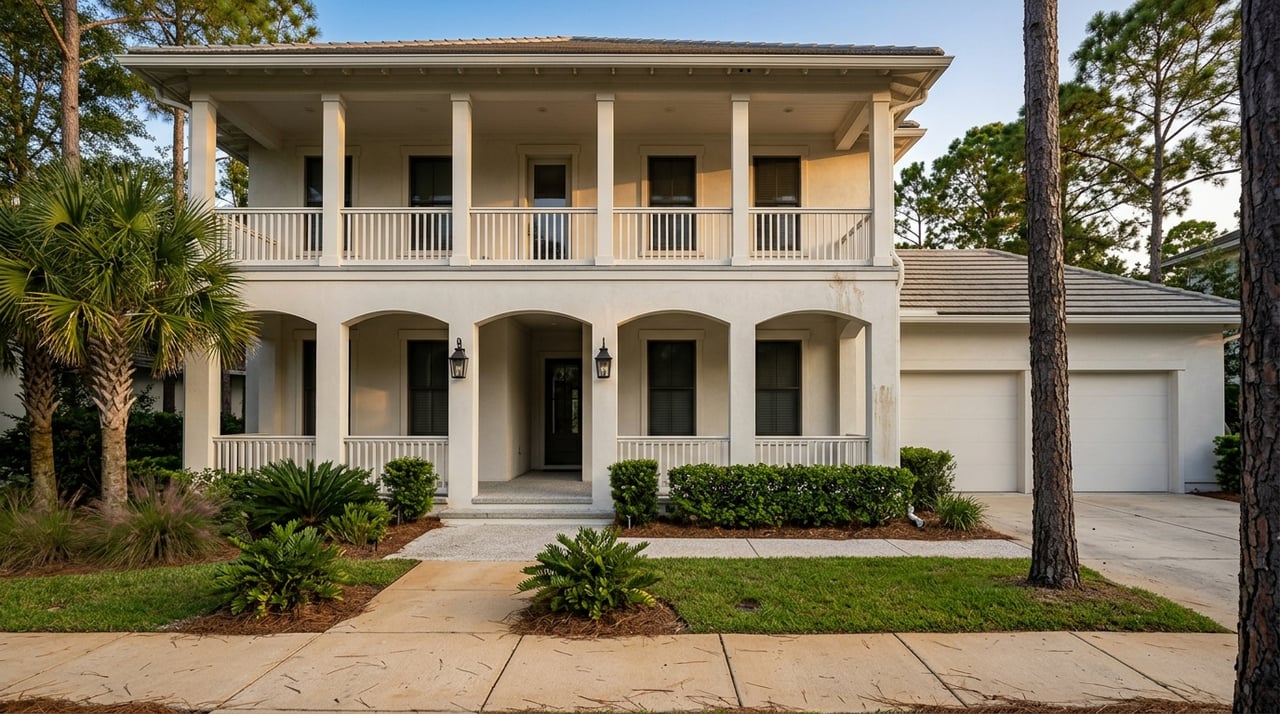
Thinking about a second home in Bay Point? It can be an exciting move, especially if you want a place that blends boating, golf, and resort-style surroundings in the Panama City Beach area. But before you fall in love with a property, it helps to understand that Bay Point ownership is a little more layered than buying in a typical neighborhood. This guide walks you through the key details so you can buy with more clarity and confidence. Let’s dive in.
Bay Point Is Not a Typical Neighborhood
One of the most important things to know is that Bay Point is a private resort community, not a standard subdivision. Its roads are privately owned, access is limited, and the community includes more than 1,500 single-family and multi-unit homes along with more than 20 sub-associations.
That setup matters when you are buying a second home. Two properties with the same Bay Point address may come with very different dues, maintenance responsibilities, insurance needs, and approval processes. In other words, the neighborhood name alone does not tell you the full ownership story.
Housing Types Vary Across Bay Point
Bay Point includes a wide mix of property types. The community’s sub-association list includes villas, golf villas, waterfront and canalfront residences, condo-style communities, marina-adjacent homes, and resort-branded ownership examples such as Bay View Villas, Golf Villas, Harbour Villas, Lagoon Towers, Legend Place, Marina Club Village, Reflections, and Marriott Legends Edge.
If you are shopping for a second home, this variety can be a plus. You may be able to find a low-maintenance condo-style property, a golf-focused residence, or a waterfront home that fits your lifestyle goals. Still, each option may carry different rules and costs, so it is smart to compare more than price and square footage.
Association Documents Matter More Here
In Bay Point, due diligence goes beyond reviewing a simple HOA summary. The master association states that required documents are accessed through AppFolio, and financial information is available through the owner portal or accounting.
Before making an offer, ask for the master association documents and the documents for the specific sub-association tied to the property. You should also review budgets, reserve information, and recent meeting minutes. This helps you understand how the community is run, what fees apply, and whether any major projects or assessments may affect your ownership costs.
Amenities Can Shape Value and Lifestyle
A big part of Bay Point’s appeal comes from its amenities. The community highlights a championship golf course, a 180-slip marina, a yacht club, and a four-star resort hotel, while the marina is described as a protected full-service marina.
For many second-home buyers, those features are the reason Bay Point stands out. If you plan to spend time on the water or want access to golf and marina facilities nearby, that lifestyle may strongly influence which part of Bay Point feels like the right fit.
Golf Membership Is Separate
If golf is high on your wish list, it is important to budget carefully. Bay Point Golf Club states that membership is separate from property ownership, and its 2025 membership application lists a $15,000 initiation fee for annual individual or family golf membership, with monthly dues of $394 or $526. Optional annual trail fees are listed at $3,000 or $4,100, and the agreement says membership is non-equity and does not create ownership interest in the club or related facilities.
Fees can change, so confirm current pricing before you rely on those numbers. The key takeaway is simple: buying a home in Bay Point does not automatically include club ownership or golf access.
Waterfront Features Often Need Approval
Waterfront and canalfront homes can be especially appealing for a second-home purchase, but they can also come with more rules. Bay Point’s governing standards require architectural review for items such as boat lifts, davits, pools, and other exterior improvements.
If you are considering a home because you want to add or update boating features, ask what is already approved. You should also verify whether future improvements would need ARC approval after closing. That step can save you time, money, and frustration later.
Plan for the True Cost of Ownership
A second home budget should include more than the mortgage payment. In Bay Point, your long-term costs may include layered association dues, property taxes, flood insurance considerations, and optional club expenses.
Looking at the full picture early can help you avoid surprises. It also makes it easier to compare one Bay Point property to another in a meaningful way.
Florida Homestead Benefits Usually Do Not Apply
For many buyers, this is a major financial point. Bay County states that homestead eligibility requires the property to be your permanent residence in good faith. If your Bay Point purchase is a second home rather than your primary home, it will usually not qualify for Florida homestead benefits.
Bay County also notes that residences without homestead are not eligible for the amendment limitation, and Save Our Homes portability is tied to homesteaded property. That can affect your tax planning, so it is wise to estimate taxes based on second-home status rather than assuming a primary-residence benefit.
Bay County Tax Timing Is Predictable
Bay County property tax bills follow a set calendar. The Bay County Tax Collector says tax notices are mailed on November 1, with a 4% discount for paying in November, 3% in December, 2% in January, 1% in February, and no discount in March.
This schedule can help with second-home cash-flow planning. The tax collector also notes that it does not assess property values, while the property appraiser offers a tax estimator that can help buyers plan ahead.
Flood Risk Needs Close Attention
Flood and storm costs are a major part of coastal ownership. Bay County states that the area’s primary flooding issue is rainfall from frequent stormy weather, and standard homeowner policies do not cover flood damage.
The county also notes that updated FEMA flood maps took effect on August 16, 2024, and some properties may face higher base flood elevation requirements or flood zone changes. In addition, county permit rules say substantial improvements at or above 50% of a building’s market value over a 10-year period can trigger new flood-compliance requirements.
For a second-home buyer, this means flood due diligence should happen early. Review the property’s flood profile, ask about current insurance, and understand how future renovation plans could affect compliance and cost.
Questions To Ask Before You Buy
Bay Point rewards careful buyers. Before you move forward, make sure you have answers to a few location-specific questions.
- Which association structures apply to this property? Ask about the master association, the sub-association, current dues, reserve levels, and any pending assessments.
- Are all current assessments paid? Bay Point rules indicate that some approvals require proof that the most recent BPCA and BPW assessments are paid.
- What access rules apply? Because Bay Point is private with limited access and privately owned roads, ask how guests, vendors, tenants, and service providers enter the community.
- Is the parcel in unincorporated Bay County or inside Panama City Beach city limits? Parcel-level confirmation matters because rules and services can differ.
- What exterior improvements need approval? This is especially important for waterfront or canalfront homes where lifts, docks, seawalls, or similar features may involve review.
- Does the property purchase include only the home, or are you separately planning for golf membership? Club access should never be assumed.
Why Local Guidance Helps in Bay Point
Buying a second home in Bay Point is often less about finding a nice property and more about finding the right fit within a layered private community. You want to understand the exact parcel, the association stack, the flood profile, and the lifestyle costs tied to how you plan to use the home.
That is where local knowledge can make a big difference. When you work with a team that knows Bay County and the Panama City Beach area closely, you can ask better questions, compare options more clearly, and move forward with fewer unknowns.
If you are exploring a second home in Bay Point and want help sorting through property types, ownership costs, and local considerations, connect with Think Real Estate for knowledgeable guidance tailored to your goals.
FAQs
What makes Bay Point different from a typical neighborhood in Bay County?
- Bay Point is a private resort community with privately owned roads, limited access, and more than 20 sub-associations, so ownership details can vary from one property to another.
What should you review before buying a second home in Bay Point?
- You should request the master association documents, sub-association documents, budgets, reserve information, recent meeting minutes, and details on dues or pending assessments.
Does buying a home in Bay Point include golf club membership?
- No. Bay Point Golf Club states that membership is separate from property ownership and comes with its own initiation fees, dues, and optional trail fees.
Why is flood due diligence important for Bay Point second homes?
- Bay County says homeowner policies do not cover flood damage, updated FEMA flood maps took effect in 2024, and some properties may face different flood zone or elevation requirements.
Do second homes in Bay Point qualify for Florida homestead benefits?
- Usually not. Bay County says homestead eligibility requires the property to be your permanent residence in good faith.
What should you ask about a Bay Point waterfront or canalfront property?
- Ask what exterior features are already approved and whether future work, such as boat lifts, davits, pools, docks, or seawall-related improvements, would require architectural review.